Sunday, November 24, 2013

What is so fascinating about sapphires


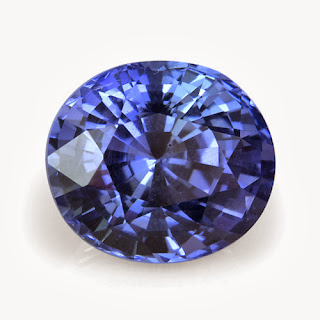
As most of you have probably seen, we recently had some small unheated sapphires in many colors coming to online store. Amongst them was this unusual violetish grey sapphire. I don’t believe many of you have even heard of grey colored sapphires. They are quite rare and unknown to many. Grey is also considered an ‘undesirable’ color when it comes to sapphires. Therefore, there prices are relatively low due to lower demand.

What is so fascinating about sapphires is beauty is in the eye of the beholder. A stone that would be undesirable to one may be the most desirable to another.

Regardless of perceived value, I found this to be quite an interesting piece. Unlike stronger colored sapphires, this one tend to reflect  all the pretty colors that fall on it. So if you are wearing blue and green, its facets reflect those colors. 

One of my close friends who saw this stone, fell in love with it straight away. She says it’ll go beautifully with her mum’s silver hair and that it’ll be a fabulous Christmas gift mum and her can share. What a thoughtful way to celebrate Christmas. 


Many more small blue, yellow, pink and purple sapphires in store for you to pick a precious gift for your favorite. May be you will get to share the prezzie too?


Wednesday, November 13, 2013

Ladies, its pink season!


With Christmas just around the corner and Spring in Oceania, ladies its pink season! Isn’t this the best time of the year with lots family time with your favourites and holidays lining up?  

We recently visited South Australia and happened to drive past Lake Bumbumga in the outback. It was gleaming in pink with white salt banks. Bear in mind sea is no where to be seen and the lake is surrounded by beautiful wheat farms. If you are planning on visiting Australia, you must pay a visit to this place; it was the most magical experience. I believe pink water is due to an algae that grows in that particular mix of salty water. 


T
o make this holiday season even more exciting, we recently had new unheated pink sapphires coming to store. In general, pink sapphires look best under incandescent light, but photos on the website are under natural daylight to give you a more accurate idea of the color during the day. Almost all of them are very rich in color. What will you be asking santa this Christmas? Perhaps a pink sapphire that will hold lasting memories? 


Monday, September 23, 2013

How do sapphires get their color?


Cornflower blue sapphire, Ceylon Sapphire, Blue Sapphire
I had a few customers enquiring about sapphire colors and the difference between ruby and sapphire. Well, I do not intend to be too technical here, but it is exciting to know a little more about these beautiful natural sapphires. I’ll try to be as clear and concise as possible. 

Firstly, sapphire and ruby both belong to the the family of corundum, which comes in all colors. All colors except red are referred to as sapphire.

Corundum in its purest state is aluminum oxide (Al2O3), which is a colorless sapphire. Additional elements or impurities combined with these base elements gives the breathtaking sapphire colors. 

Combination of titanium and iron makes a blue sapphire. Chromium impurities make a ruby red - various shades of pink to red are based on the amount of chromium. Existence of chromium with other elements of a blue sapphire makes a purple sapphire. Yellow sapphires are a bit more complicated. They have a few different ways of getting their color. Majority are colored by the existence of iron (I won’t discuss other methods here as it involves a lot more chemistry). Iron is also responsible for green sapphires; due to rarity green sapphires are virtually unheard of. 

As you can see iron is responsible for blue, yellow and green colors. Majority of Australian blue sapphires tend to have more of a greenish secondary hue mainly due to higher quantities of iron. 

Other than the color, all other properties such as hardness and toughness remains the same across all sapphire colors. 

We are also working on updating the website with a more descriptive content around sapphire colors. Until then hope you enjoy reading. 


Monday, August 19, 2013

Fascinated to know the internals of your sapphire?


A very quick way to see the internal features of your sapphire is to immerse it in a glass of water. You will see most of the inclusions, colour zoning and colour banding.

You’ll be surprised to find out that your sapphire doesn’t have colour whole throughout its body. Most likely it will have color concentrated closer to the culet of the stone and/or closer to the sides of the stone. 

It is very rare, specially for a blue sapphire to have colour throughout the whole body of the stone. It is the talent of the cutter to bring the best out of this incredible natural beauty. If the colour is concentrated into one corner of the rough stone, amongst other things, cutter will almost always try to put that concentrated colour patch on the culet of the stone or to the centre. If you have a few colour patches, cutter will try to cut the stone so the colour patches are positioned around the edge. This way once the sapphire is cut, you will see the whole stone as one beautiful colour. 


Sunday, July 28, 2013

What is cornflower blue?


Image courtesy of Patou / FreeDigitalPhotos.net
Cornflower (image to the right) is a strong light to medium blue flower with a slight violetish tone. Due its beauty its used as a reference point when describing other objects including sapphires.

As you can imagine it is very difficult to define a colour of a natural sapphire by comparing it to a colour of a natural flower. There is no definite mix of colours and cornflowers themselves have slight variations of colour amongst them. Without a doubt colour of a sapphire should be described by its hue, saturation and tone. 

Ceylon sapphires are most famous for their lighter blue colours, and many are close to “cornflower blue”. In the world of sapphires “cornflower blue” is a prestige term and is a highly priced colour. Hence, you see the misuse of this term with some even referring to darker blue sapphires as “cornflower blue”.  

You should always appreciate and love what you see and not the terms used to describe them. In saying that, these terms are still commonly used. If you ever wondered what cornflower blue is, it is more or less a strong light to medium blue with a slight hint of violet. 


Tuesday, July 16, 2013

Unheated sapphire care and cleaning guide


SUITABLE FOR DAILY WEAR

Corundum (gem material of sapphire and ruby) is the second hardest gem material in the world, second only to diamond, which means sapphire can only be scratched by another sapphire or a diamond. This also means that unlike many other coloured gemstones such as tanzanite, contact with dust (which contains high quantities of silica) will not scratch a sapphire. 

Corundum also has excellent toughness and no cleavage (tougher than diamond). This means that sapphires are not prone to chipping, cracking, or breaking.

Unheated sapphire is also stable under normal wearing conditions such as heat, light, and common chemicals. However, even mild acids like lemon juice can damage fracture-filled and some treated sapphire.

These qualities make natural unheated sapphire a highly durable gemstone suitable for daily wear. 

CLEANING

Easiest and safest way to clean sapphire is to wash it in warm soapy water and wipe it with a gem cleaning cloth. Ultrasonic and steam cleaners are usually safe for untreated sapphires, but you do not need to use chemicals to clean your stone. Due to its hardness sapphire can take a high quality polish and therefore washing in soapy water is more than enough.

STORING SAPPHIRE JEWELLERY

In general, when storing loose gemstones or jewellery, take a good care not to let them touch one another and that each piece is stored separately. As a hard gem material, sapphire can scratch softer gemstones, other sapphires or precious metal such as gold or platinum. And as diamonds are harder than sapphires, it can scratch sapphires. 

This article has been reposted from Deliqa Gems (Copyright 2013 Deliqa Gems) Hope this helps you to look after your precious unheated sapphire


Thursday, July 4, 2013

Time for transparency?


Recently I had a discussion with a gemmologist who is also a gem supplier and predominantly supplies heat treated sapphires to the Australian market. I’ll try not give you clues of who this person is. 

He/ She says that when he/ she sells a heat treated sapphire to a customer he/ she does not disclose that the stone has been heated unless the customer enquires. His/ Her argument is that as no external elements have been added in the process of heat treatment, the stone is 100% natural and that they have simply sped up the heating process that would have otherwise occurred naturally under the Earth’s surface. He/ She proceeds to say that Australian customers do not tend to query whether the sapphire has been treated, but international customers such as in Europe and US do query this often. 

I believe this has more to do with lack of customer awareness here in Australia, whereas European and US customers are a lot more educated about gemstone enhancements. 

I feel this is a bias opinion from a seller who supplies heated sapphires. Whilst I appreciate that heat treatment has assisted vastly to maintain reasonable prices by increasing sapphire supply in the market, it is still an enhancement to the natural stone. There is no guarantee that a heated sapphire would have the same performance if it was left underground for many thousand years more. One of the greatest fascination of gemstones is their rarity. Evidently fine quality unheated sapphires are rarer than enhanced sapphires. 

Image courtesy of Stuart Miles / FreeDigitalPhotos.net
Customers need to be aware of what they are purchasing. 
In my opinion, if the seller is aware of any kind of enhancement to the gemstone it should be disclosed regardless. The customer can then proceed to ask more questions. This would be a great opportunity for the seller to educate the customer about the difference between traditional heat treatment and other treatment methods. 

We used to deal with heated sapphires ourselves, but we disclosed all information we were aware of. I think it is important to disclose known enhancements of a gemstone and educate customers in order to maintain a trustworthy industry. 

This is such a dividing topic, your opinion is greatly appreciated.